
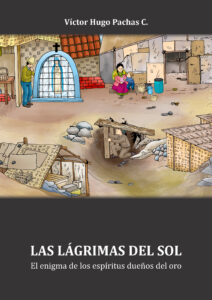
Las lágrimas del sol: enigma de los espíritus dueños del oro. Pachas, V.H. (2021). Alliance for Responsible Mining (ARM). Lima.
Abstract: In Bolivia, Colombia, Ecuador, and Peru, miners receive in their dreams a gift, an economic enigma that reveals for them the location of valuable gold deposits. They need to be worthy of the gift by paying it back through rituals that symbolically emphasize the pivotal role of verbal agreements and of women in preserving kinship systems. Consequently, the primary spirit of the mine is ritualized as a woman. This practice elevates the miner’s social standing, enabling the establishment of verbal agreements with peers. Within a small-scale mining context fraught with conflict, this culture signifies a relentless commitment to upholding verbal agreements in a world characterized by uncertainty. The small scale mining culture, rooted in uncertainty, thrives on the fringes of a hegemonic society that consistently marginalizes the Andean economy. Miners navigate a rich tapestry of religious diversity, journeying through and assimilating religious codes from Andean, Catholic, and Evangelical traditions.
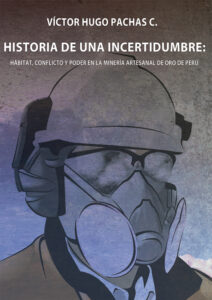 Historia de una incertidumbre: Habitad, conflicto y poder en la minería artesanal de oro de Perú. Pachas, V.H. (2013). Second edition. Earth First. Lima.
Abstract: This analysis examines the domain of artisanal and small-scale mining in the 20th century Peru. Despite operating informally, this activity persists, leading to potential conflicts and significant environmental pollution. However, it is integral to a multifaceted social and economic issue. Viewed through an anthropological lens, the development of the artisanal miners’ social milieu, shaped by Andean logic, identifies it as an Andean economy. The book centers its discussion on elucidating the traits of habit formation within this economic context, mining rationality, social conflicts, power dynamics among the involved stakeholders, and the insights gained from this intricate landscape.
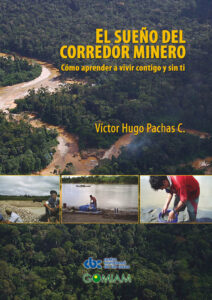 El sueño del corredor minero: cómo aprender a vivir contigo y sin ti. Pachas, V.H. (2012). Centro Bartolomé de las Casas.
Abstract: Within the six essays encompassed in this study, an exploration unfolds, outlining how the gold economy might evolve, ultimately contributing to regional development while fostering harmonious coexistence with the environment. This book scrutinizes the Peruvian government’s proposal concerning a «mining corridor» and its significance in shaping the future of gold mining within the Madre de Dios Amazonian region of Peru. It purports that the sustainability of the «mining corridor» can endure over time, contingent on the particular political and economic attributes of the Peruvian government and the miners’ willingness to actively engage in these processes. A narrative is presented envisioning a potential milieu of coexistence between conservation and extractivism. Furthermore, the study delves into various sociocultural dynamics tied to territorial management, replete with distinctive social arrangements, customs, and verbal agreements. These multifaceted aspects, in turn, hold the potential to resolve diverse tensions and social conflicts.
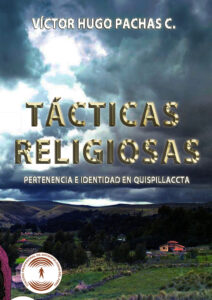 Tácticas religiosas. Identidad y pertenencia en Quispillaccta. Pachas (2011). Colegio de Antropólogos del Perú. Lima.
Abstract: This study delves into the religious pathways undertaken by both women and men within the rural community of Quispillacta, situated in the Cangallo province of Ayacucho, Peru. This research systematically and critically assesses the religious evolution that has transpired in recent years, emphasizing the development of identities and affiliations within non-Catholic belief systems. The study seeks to elucidate the strategic initiatives employed by religious actors to foster coexistence, scrutinize conflicts, and dissect power dynamics. By examining the intricate social fabric that intertwines Catholic adherents, the Assembly of God of Peru, Jehovah’s Witnesses, the Sisters of Charity of Leavenworth, and individuals who do not subscribe to religious beliefs, this study highlights how diverse groups sustain distinct identities and social bonds. Notably, they leverage their Andean rationale to formulate strategies aimed at promoting intercultural coexistence.